
A backyard pond has a way of becoming the favorite spot in the yard. Coffee in the morning. Kids watching tadpoles in spring. The quiet hum of moving water on a summer evening.
For homeowners planning a new water feature, the decision almost always comes down to one technical question. Liner or concrete?
Both methods can deliver decades of beauty when they’re built right. Both can fail early when they aren’t. Here’s how the two stack up when long-term durability is what matters most.
Understanding the Two Main Types of Pond Construction
Every pond starts with a hole. What goes in next is where the methods split.
A liner pond uses a flexible waterproof membrane. EPDM rubber is the most common choice, the same material used on flat commercial roofs. It stretches, conforms to the excavated shape, and ages slowly. RPE, a reinforced polyethylene, is the newer option, thinner but tougher against punctures. PVC sits at the bottom of the range; the plasticizers that keep it flexible can leach out over time, which is why most quality installers avoid it for ponds meant to last.
A concrete pond is closer to a small swimming pool in how it’s built. The shape is framed with rebar, then either poured into formwork for straight walls or sprayed on as gunite or shotcrete for free-form curves. Once it cures, the result is a rigid, sealed shell that becomes part of the property the way a foundation does.
Both have been around for generations. They just age differently.
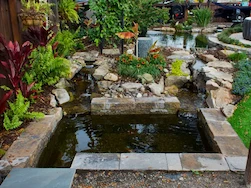
Durability Comparison: Pond Liner vs Concrete
A 45-mil EPDM liner installed over proper underlayment will typically give 20 to 30 years before serious attention is needed. RPE can push past 40. Concrete ponds, when engineered and finished correctly, can run 30 to 50.
The gap between a great concrete pond and a poor one is wide. Skimping on rebar, rushing the cure, or skipping the waterproof coating will produce hairline cracks within a few seasons.
Climate is where the biggest performance gap shows up. In cold regions with hard freeze-thaw cycles, concrete takes a beating. Water finds the smallest crack, freezes, expands, and pries it wider every winter. Liners flex with the ground and shrug it off. In hot southern climates, the script flips somewhat. Sun shortens the lifespan of any plastic membrane, while concrete handles direct sun without complaint.
Soil tells its own story. Heavy clay swells and shrinks with moisture. Sandy soils settle. A liner absorbs that movement. Concrete resists until it cracks, often as a slow leak that goes unnoticed until the water level starts dropping.
A torn liner can usually be patched in an afternoon, often without draining the pond. A cracked concrete shell means draining, locating the crack, grinding it open, applying hydraulic cement, recoating, and refilling. Manageable, just a bigger weekend.
Installation and Maintenance Considerations
A liner pond goes in fast. Excavation, underlayment, drape the liner, fill, trim. Most residential installs are a single working day.
A concrete pond is a multi-week project. Excavation, rebar, formwork or shotcrete spray, curing, lime leaching (fresh concrete drives pH high enough to be toxic to fish), waterproof coating, then fill. Two to three weeks is realistic for a mid-sized build.
Day-to-day care is similar across both: skimming debris, balancing the biology, checking the pump, deep cleaning every few seasons. The differences show up in inspection.
With a liner, watch for:
-
Tears or punctures from roots or burrowing wildlife
-
Edge displacement where rim stones have shifted
-
Gaps where the liner has pulled away from the lip
With concrete, the eye goes to hairline cracks at the waterline, spalling from freeze damage, and a sealer that’s started to chalk or bubble. Catching any of it early keeps the repair small.
Cost Comparison: Short-Term vs Long-Term Investment
Liner ponds cost less to build. Cheaper materials, faster labor, no specialty crew on site for a week. For most residential projects, the price comes in at a fraction of what an equivalent concrete pond would run.
Concrete ponds carry a higher price from day one. Specialized labor, longer timeline, sometimes structural engineering for larger builds. The cost reflects permanence, and the entry price is real.
The long-term math closes the gap. Over a 25-year horizon, a liner pond may need one replacement, especially if the original used a thinner gauge. A well-built concrete pond should need only resealing and routine upkeep in that same period. So the upfront difference flattens out when you take a long view.
For homeowners staying long-term who want a permanent feature, concrete starts to make sense. For homeowners who want flexibility to reshape later, or who are working within a tighter budget, a quality liner pond will serve well for decades.
Which Pond Type Is Best for Your Property?
Site conditions usually decide this before personal preference does.
A liner pond is the right call when the project has:
-
Cold climates with hard freeze-thaw cycles
-
Variable, settling, or expansive soils
-
A naturalistic design with plant shelves and irregular edges
-
Larger footprints, especially around a quarter acre or more
-
A budget that balances quality with cost
A concrete pond is the better fit when the project has:
-
Stable soil and a mild climate
-
Formal, geometric, or architectural design intent
-
Tight integration with hardscaping like patios or courtyards
-
A small footprint where the cost difference is manageable
-
Steep vertical walls a flexible membrane can’t cleanly support
Use case matters too. For show-quality koi, both methods work, though concrete needs a smooth interior so fish don’t scrape. For a planted ecosystem pond with frogs and dragonflies, liners give you the natural shelving wildlife responds to. For a reflecting pool or fountain basin tucked into a courtyard, concrete is almost always the right choice at that scale.
One thing worth saying plainly: a well-built pond of either type adds to a property’s value. A poorly built pond of either type becomes a problem the next homeowner prices into their offer. Method matters less than craftsmanship.
Final Thoughts: Choosing the Right Pond for Long-Term Durability
For most homeowners in most climates, a quality EPDM or RPE liner pond, installed over proper underlayment by someone who knows the work, will give decades of beauty with manageable upkeep and a sane budget.
For homeowners with stable soil, a mild climate, and a vision of a permanent architectural water feature, a properly engineered concrete pond is hard to beat.
The factor that overshadows all of this is who builds it. There are liner ponds from decades ago still going strong, and four-year-old concrete ponds already cracking. The installer matters more than the method.
Homeowners weighing a pond build can find experienced contractors who handle both liner and concrete construction, including specialists like Site Pros Landscaping, who walk the property carefully, talk through the trade-offs honestly, and stand behind their work years after the final invoice.