
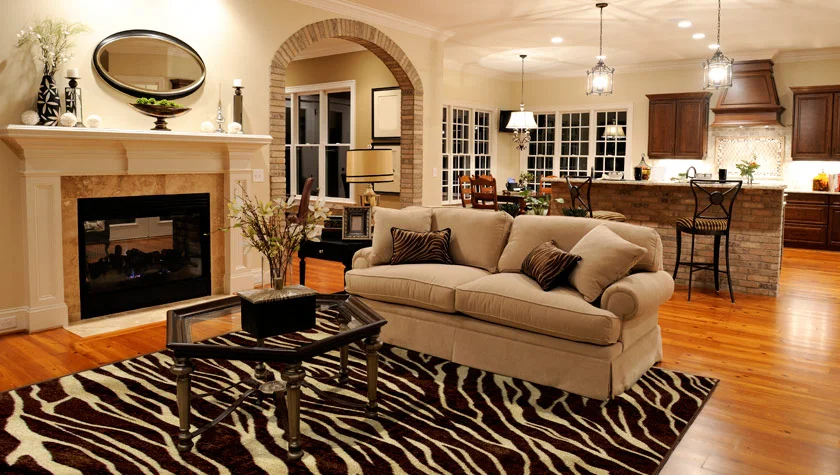
Transitional rugs work well in almost any room because they blend classic patterns with modern design. The right color combination—whether neutral, earthy, bold, or monochromatic—can anchor a space, set the mood, and tie your entire décor together.
Understanding Transitional Rugs
Walk into any well-designed home, and there’s often one element that quietly holds the whole room together. More often than not, it’s the rug.
Transitional rugs sit at the intersection of traditional and contemporary design. They carry the structure of classic patterns—think geometric motifs, subtle florals, or medallion-style layouts—but are rendered in modern colorways and cleaner lines. The result? A rug that fits comfortably in a minimalist apartment, a colonial-style villa, or anything in between.
This adaptability is exactly why transitional rugs have become a go-to choice for homeowners and interior designers alike. They don’t demand a specific aesthetic. Instead, they complement what’s already there and add a layer of warmth and character that’s hard to achieve with other flooring options.
But here’s where many people get stuck: choosing the right color combination. The pattern might be perfect, but the wrong palette can make even the most beautifully crafted rug fall flat. So let’s break down exactly which color combinations work—and why.
How Color Influences Mood and Space
Color isn’t just visual—it’s psychological. Soft blues and greens tend to create calm, open-feeling spaces. Deep reds and burnt oranges make a room feel grounded and intimate. Bright whites and pale grays reflect light and make smaller rooms feel larger.
A balanced palette means no single color dominates so aggressively that it clashes with your furniture, walls, or natural light. For transitional rugs specifically, the goal is harmony—colors that bridge the old and the new without feeling dated or out of place.
When you’re shopping for transitional rugs, look at the undertones, not just the surface color. A beige rug with warm yellow undertones will feel very different from one with cool gray undertones, even if they look similar in a photograph.
Top Color Combinations That Make Transitional Rugs Stand Out
Classic Neutrals with a Pop of Color
This is one of the most versatile combinations available. A base of ivory, cream, or soft gray paired with a single accent color—dusty rose, sage green, or navy—gives you a rug that feels fresh without being overwhelming.
This works especially well in living rooms where the furniture tends to be neutral. The pop of color in the rug gives the eye somewhere to land without competing with everything else in the space.
Earthy Tones for Natural Harmony
Warm terracotta, camel, rust, and olive green sit naturally together. These tones are rooted in nature, which is why they tend to feel immediately comfortable in a space.
Earthy-toned transitional rugs pair beautifully with wooden furniture, rattan accents, and linen upholstery. They’re also forgiving—they hide everyday wear well and tend to look better with age, especially in handwoven wool varieties.
Bold and Contrasting Hues
Black and white. Deep teal and mustard. Charcoal and burnt sienna. These high-contrast combinations make a strong visual statement and work well in rooms with minimal furniture or predominantly white walls.
Bold contrasting transitional rugs are particularly effective in dining rooms and home offices, where you want the rug to define the space clearly. The key is keeping the rest of the room restrained—let the rug do the talking.
Subtle Shades for Understated Sophistication
Blush pink, dove gray, and pale lavender layered together create a soft, considered aesthetic. These combinations don’t shout—they add depth quietly.
If your home leans toward a light, airy feel, subtle-toned transitional rugs keep that mood intact while still adding visual interest through texture and pattern. They work particularly well in bedrooms and reading corners.
Monochromatic Schemes with Texture
A single color in varying shades—from light sand to deep chocolate, or from pale aqua to rich teal—creates a cohesive, layered look. The variation in tone gives the eye movement without introducing the complexity of multiple colors.
Monochromatic transitional rugs tend to feel contemporary and clean. They’re a smart choice when your space already has a lot going on pattern-wise—busy wallpaper, patterned cushions, or statement furniture.
Tips for Incorporating Transitional Rugs into Your Home
Consider Your Existing Décor First
Before choosing a color, take stock of what’s already in the room. Pull colors from your curtains, cushions, or artwork. A transitional rug that picks up even one or two tones from your existing décor will immediately feel intentional and cohesive.
Choosing the Right Size and Placement
A rug that’s too small makes a room feel disjointed. As a general rule, all key furniture legs should sit on the rug, or at least the front legs of sofas and chairs. In dining rooms, the rug should extend at least 60 cm beyond each side of the table so chairs remain on the rug when pulled out.
Layering Rugs for Added Depth
Layering a smaller, patterned transitional rug over a larger neutral base rug adds dimension and a relaxed, lived-in quality. This works especially well in living rooms. Stick to rugs that share at least one tonal reference so they feel connected rather than random.
Where to Find Your Perfect Transitional Rug
The Benefits of Buying Rugs Online
When you buy rugs online, you get access to a far wider range than any single showroom can offer. You can compare colors, patterns, and sizes side by side, filter by material and price, and read detailed product descriptions that give you a clearer sense of what you’re buying.
The Ambiente makes it straightforward to buy rugs online with detailed photography, material specifications, and a team available to guide you through the selection process. Whether you’re after something ready to ship or a bespoke piece for a specific space, the process is clear and transparent.
The Quality of Premium Handmade Rugs from India
There’s a meaningful difference between a machine-made rug and a handwoven one—and you feel it the moment you step on it. Premium handmade rugs from India, particularly those crafted in Bhadohi (South Asia’s largest hub for hand-knotted carpet weaving), are made using techniques passed down across generations.
The Ambiente sources directly from Bhadohi, backed by over 30 years of manufacturing expertise through its parent company, Bhadohi Carpets. Their collection includes handcrafted silk and wool rugs, produced in collaboration with over 4,000 weavers—the majority of whom are women. Each rug reflects both traditional craftsmanship and contemporary design sensibility.
When you invest in a premium handmade rug from India, you’re not just buying a floor covering. You’re bringing home something made with skill, time, and care that a factory simply cannot replicate.
Elevate Your Space with the Right Transitional Rug
Color is one of the most powerful tools in interior design, and the right transitional rug puts that tool in the center of your room—quite literally. Whether you’re drawn to earthy tones, bold contrasts, or quiet monochromatic schemes, transitional rugs offer the flexibility to work with almost any home aesthetic.
Start by identifying the mood you want to create, then work backward from your existing palette. Don’t overthink the pattern—a well-chosen color combination will carry a transitional rug a long way.
Ready to find yours? Browse The Ambiente’s curated collection of premium handmade rugs from India and buy rugs online with confidence, knowing each piece is backed by decades of craftsmanship and a team that genuinely loves what they make.
Frequently Asked Questions
What are transitional rugs, and how are they different from traditional or modern rugs?
Transitional rugs blend elements of both traditional and modern design. Traditional rugs tend to have ornate, heavily detailed patterns, while modern rugs favor abstract or minimal designs. Transitional rugs sit between the two—structured enough to feel classic, clean enough to work in contemporary spaces.
Which colors work best for transitional rugs in small rooms?
Light, neutral tones—ivory, pale gray, soft beige—make small rooms feel more open. Avoid very dark or highly saturated colors in tight spaces, as they can make a room feel closed in. A rug with a subtle pattern in a light palette is usually the safest and most effective choice.
How do I choose a transitional rug color that works with my existing furniture?
Identify the dominant undertone in your furniture—warm (yellow, orange, red) or cool (blue, green, gray)—and choose a rug that shares that undertone. Rugs that contrast too sharply with surrounding furniture tend to feel disconnected rather than intentional.
Are handmade rugs from India worth the investment?
Yes. Premium handmade rugs from India, especially those from Bhadohi, are made using traditional hand-knotting and hand-tufting techniques that produce a significantly denser, more durable pile than machine-made alternatives. They also tend to hold their color and structure for decades when cared for properly.
Can I buy transitional rugs online without seeing them in person?
Yes—especially when the retailer provides high-resolution photography, detailed material descriptions, and direct customer support. The Ambiente offers all three, along with a team experienced in helping customers match rugs to their specific spaces remotely.
What size transitional rug do I need for a living room?
For most living rooms, an 8×10 ft or 9×12 ft rug works well. All key furniture pieces—or at least their front legs—should sit on the rug. A rug that’s too small will make the seating area feel disconnected from the rest of the room.