
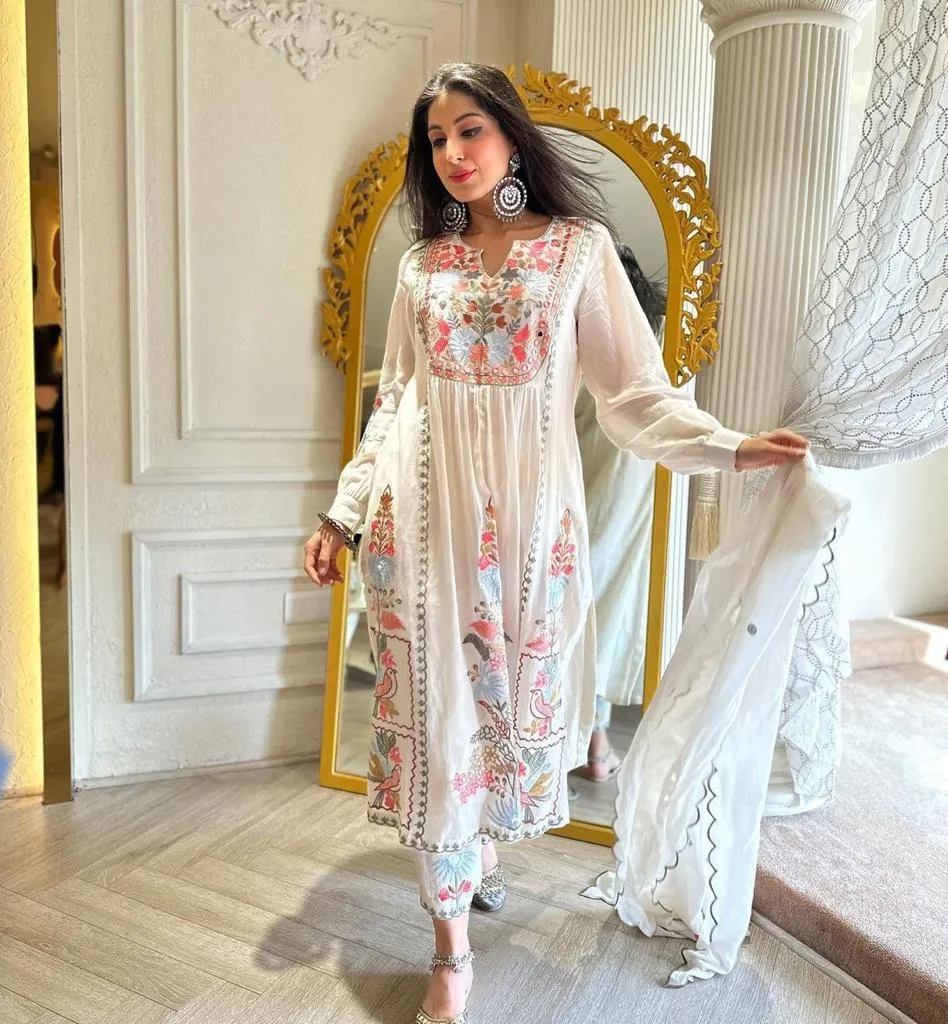
Mirror Work Kurti is much more than a piece of clothing; it is a shimmering reflection of India’s rich textile heritage and artistic soul. When you wear one, you aren’t just putting on a garment, you are carrying centuries of tradition that originated in the heart of Rajasthan and Gujarat. The way the tiny glass pieces catch the sunlight or the soft glow of evening lamps creates an ethereal aura that few other embellishments can match. I remember the first time I saw an authentic Shisha embroidery piece at a village fair in Kutch, where the artisan explained that these mirrors were originally intended to ward off evil eyes. Whether that is true or not, there is no denying the magical charm they bring to a woman’s silhouette, making her stand out in any crowd with effortless grace.
The history of this art form, often referred to as Shisha or Abhala Bharat embroidery, dates back to the 17th century. Initially, artisans used naturally occurring minerals like mica to create the reflective effect before glass became widely available. Today, the Mirror Work Kurti has evolved from a traditional folk garment into a high-fashion staple that graces international runways. Modern designers have found ingenious ways to blend these traditional elements with contemporary cuts, creating a fusion that appeals to both the young college student and the sophisticated professional. The versatility of mirror work is its greatest strength, as it can be subtle enough for a day at the office or extravagant enough for a grand wedding celebration.
When we talk about the technical side of this craft, it is fascinating to see the precision involved. Each mirror is held in place not by glue, but by a complex web of cross-stitched threads that form a protective frame around the glass. This ensures that the mirrors stay secure even after multiple washes, provided you give the garment the care it deserves. In my experience working with various textile experts, I have learned that the quality of the thread and the density of the stitch are what define the longevity of the piece. A high-quality kurti will feature silk or mercerized cotton threads that won’t fray easily, ensuring that your investment remains a prized part of your wardrobe for years to come.
The Cultural Significance of the Mirror Work Kurti
The cultural roots of this embroidery run deep into the nomadic tribes of Western India, where color and sparkle were used to contrast the stark, arid landscapes of the desert. For these communities, a Mirror Work Kurti was a symbol of festive joy and marital status, with specific patterns representing different clans and stories. Even today, when you choose a design featuring heavy mirror embellishments on the yoke, you are tapping into an ancient visual language. The geometric precision of the mirrors often mimics the constellations in the night sky, providing a cosmic connection that makes the wearer feel grounded yet celestial.
In many rural households, the art of mirror work is passed down from mother to daughter as a rite of passage. This creates a deep emotional bond between the creator and the craft, which is something you can actually feel when you touch an authentic, hand-embroidered piece. While machine-made versions have flooded the market, they often lack the soul and the slight, beautiful imperfections that come with handwork. As a conscious consumer, opting for hand-crafted mirror work supports these local artisans and helps keep this magnificent tradition alive in an age of fast fashion. It is a choice that values human skill over mechanical speed.
The evolution of the color palette used in these kurtis is also a story of cultural shifting. Traditionally, you would see mirrors set against vibrant reds, oranges, and deep blues. However, the modern aesthetic has introduced pastels like powder blue, mint green, and blush pink into the mix. These softer hues allow the mirrors to shine with a more sophisticated, understated brilliance. It makes the garment suitable for morning events like a brunch or a professional meeting where you want just a hint of traditional flair without appearing overly festive. This adaptability is exactly why the style remains a perennial favorite among fashion enthusiasts across the globe.
Fabric Choices and Their Impact on the Look
Choosing the right fabric for your kurti is just as important as the embroidery itself, as the base material dictates how the garment drapes and how the mirrors sit on the body. For a casual summer day, cotton is the undisputed king. A cotton-based kurti with small, scattered mirrors provides breathability while keeping the look light and fresh. The matte finish of the cotton allows the mirrors to pop, creating a beautiful contrast that feels earthy and organic. I often recommend cotton for those who are new to mirror work, as it is easy to style and maintain for daily wear.
If you are looking for something with a bit more flow and drama, georgette or chiffon is the way to go. These fabrics are lightweight and have a beautiful fall that complements the weight of the mirrors. In a Mirror Work Kurti made of georgette, the mirrors often seem to float on the fabric, creating a shimmering effect as you move. This is particularly striking for evening parties or festive gatherings where there is a lot of movement, such as a Sangeet ceremony. The slightly sheer nature of these fabrics also adds a touch of sensuality and modern elegance to the traditional embroidery.
For grand occasions, nothing beats the luxury of silk or Chanderi. The natural sheen of silk provides a regal backdrop for the reflective glass work, making the outfit look incredibly expensive and high-end. Silk also provides a more structured look, which is perfect for formal events where you want a crisp silhouette. When you pair heavy mirror work on the neck and sleeves with the rich texture of silk, you create a masterpiece that requires very little extra jewelry. The fabric itself carries a sense of authority and timelessness that makes it a perfect choice for weddings and milestones.
Innovative Ways to Pair Your Mirror Work Kurti
Styling is where you can truly let your personality shine, and the beauty of a mirror-embellished top is that it plays well with various bottoms. For a traditional look, you can never go wrong with a pair of contrasting leggings or a flared palazzo. If the kurti has heavy work, I usually suggest keeping the bottoms plain so that the focus remains on the shimmer of the mirrors. A matching dupatta with a mirror-work border can tie the whole look together, creating a cohesive ethnic ensemble that feels polished and complete.
For those who love a bit of fusion, pairing your kurti with denim is a game-changer. A short, straight-cut kurti with mirrors looks incredibly chic when worn over skinny jeans or even distressed denim. This look bridges the gap between the East and the West, making it perfect for a movie date or a casual outing with friends. Adding a pair of tan leather boots or traditional juttis can further elevate this fusion style. It is a practical way to incorporate traditional wear into your modern lifestyle without feeling like you are wearing a costume.
Another contemporary trend is pairing these kurtis with long, voluminous skirts or lehengas. This creates a heavy, festive silhouette that is perfect for bridesmaids or close family members at a wedding. By choosing a skirt in a complementary color, you can create the illusion of a full lehenga set while enjoying the comfort and ease of a kurti. This styling choice is also great for different body types, as it highlights the waist and provides a flattering, flared look below. It’s a wonderful way to experiment with volume and light, using the mirrors as the focal point of the entire outfit.
Accessorizing for a Radiant Appearance
When it comes to accessories, the rule for a Mirror Work Kurti is often “less is more” because the garment itself is already quite luminous. However, the right jewelry can enhance the look significantly. Oxidized silver jewelry is a classic partner for mirror work, as it shares the same rustic, bohemian vibe. A pair of heavy jhumkas or a statement silver necklace can complement the glass work perfectly without clashing. I have found that silver jewelry brings out the cool tones of the mirrors, making the outfit feel more grounded and authentic.
If your kurti has gold thread work alongside the mirrors, you might want to opt for gold-toned or kundan jewelry. This creates a warmer, more opulent look that is ideal for night-time celebrations. However, be careful not to overdo it; if the neck of your kurti is heavily embellished with mirrors, you might want to skip the necklace and go for a pair of oversized Maang Tikka or heavy bangles instead. This balance ensures that your accessories don’t compete with the intricate embroidery of your kurti, allowing each element to have its own moment.
Footwear and bags also play a vital role in completing your aesthetic. Traditional Rajasthani mojaris or embellished juttis are the most natural choice, as they often feature similar mirror or thread work. For a more modern twist, you can opt for metallic heels or even block-heeled sandals in neutral tones. As for bags, a small potli bag or a clutch with a few mirror accents can be the perfect finishing touch. By repeating the mirror theme in your accessories in a subtle way, you create a rhythmic visual flow that makes your entire appearance look well-thought-out and professional.
Maintaining the Luster of Your Embellished Wear
One of the biggest concerns with owning a kurti with glass work is maintenance, as many fear the mirrors might fall out or lose their shine. However, with the right techniques, you can keep your kurti looking brand new for years. The first and most important rule is to always hand wash these garments in cold water using a mild detergent. Avoid the washing machine at all costs, as the agitation can break the mirrors or snag the delicate threads holding them in place. A gentle soak and a light rinse are usually all that is needed to clean the fabric without damaging the work.
When it is time to dry your kurti, never wring it out, as this can distort the shape of the embroidery and potentially crack the mirrors. Instead, lay it flat on a clean towel and let it air dry in the shade. Direct sunlight can fade the colors of the fabric and the threads over time, so a shaded area is always better. If you must iron your kurti, always do it on the reverse side. This prevents the hot iron from coming into direct contact with the mirrors, which could lead to discoloration or even melting if the mirrors are made of high-quality plastic or foil.
Storing your embellished clothes correctly is also key to their longevity. I always recommend wrapping your mirror work pieces in a soft muslin cloth or placing them in a separate garment bag. This prevents the mirrors of one kurti from catching on the threads or beads of another outfit in your closet. Also, avoid hanging heavy mirror-work kurtis on thin hangers, as the weight of the embellishments can cause the fabric to stretch at the shoulders. Folding them neatly and storing them flat in a cool, dry place is the best way to preserve the structural integrity and the shimmer of the garment.
The Evolution of Mirror Work in Modern Fashion
As fashion continues to move toward a more globalized and inclusive aesthetic, the Mirror Work Kurti has found its place in the wardrobes of women around the world. It is no longer just “ethnic wear” but a piece of “global artisanal fashion.” We see elements of mirror work appearing in the collections of major international designers, used on everything from evening gowns to luxury handbags. This global recognition has brought a new level of respect and value to the traditional artisans who have been practicing this craft for generations, ensuring that their skills remain in high demand.
The rise of social media and fashion influencers has also played a significant role in the resurgence of this style. We now see young women styling mirror kurtis with sneakers, belts, and even leather jackets, proving that there are no limits to how this traditional craft can be interpreted. This creative freedom has kept the style fresh and exciting for the Gen Z and Millennial audiences. It shows that while the techniques of the past are being honored, the way we wear them is constantly shifting to reflect our modern identities and lifestyles.
Furthermore, the focus on sustainable and ethical fashion has pushed many consumers back toward hand-crafted items like mirror work. People are increasingly interested in the “story” behind their clothes—who made them, what techniques were used, and how the craft supports a local community. A hand-embroidered kurti is a perfect example of “slow fashion,” where every piece is unique and made with intention. By choosing such a garment, you are making a statement that you value quality over quantity and that you appreciate the time and effort that goes into creating a beautiful piece of wearable art.
Choosing the Right Mirror Work for Your Body Type
Understanding how the placement of mirrors can affect your overall silhouette is a great way to choose the most flattering kurti for your body type. If you have a pear-shaped body, a kurti with mirrors concentrated on the shoulders and chest can help draw the eye upward, creating a more balanced look. A boat-neck or a V-neck design with heavy work on the yoke is particularly effective for this. It highlights your upper body while the lower part of the kurti can be a simple A-line or straight cut that flows smoothly over the hips.
For those with an apple-shaped body, I usually suggest kurtis that have vertical patterns of mirror work. This creates an elongating effect that makes the torso appear slimmer. Avoid designs with very large mirrors or heavy work right at the waistline; instead, go for subtle work scattered throughout the garment or concentrated at the hemline. A straight-cut kurti in a slightly darker shade with vertical lines of mirror work can be incredibly slimming and sophisticated. It provides a touch of sparkle without adding bulk where you might not want it.
If you have an athletic or rectangular body type, you can use mirror work to create the illusion of curves. Look for kurtis that have circular or floral mirror patterns around the bust and the hips. A cinched waist or a kurti with a belt can also help define your silhouette. You have the freedom to experiment with larger mirrors and more extravagant patterns, as the extra detail will add volume and shape to your frame. The key is to use the reflective nature of the mirrors to highlight the areas you want to emphasize, creating a dynamic and feminine look that feels tailored just for you.
Mirror Work for Different Age Groups
One of the most beautiful things about this style is that it is truly ageless. For young girls and teenagers, mirror work can be fun, colorful, and playful. Brightly colored short kurtis with multi-colored thread work and mirrors are perfect for school functions or family get-togethers. It allows them to participate in their culture in a way that feels youthful and energetic. At this age, the focus is often on the sparkle and the “fun” factor of the mirrors, making it a great introduction to the world of ethnic fashion.
For women in their 20s and 30s, the Mirror Work Kurti often becomes a piece of personal expression and style experimentation. This is the age to try out bold fusion looks, such as wearing a long mirror kurti as a dress or pairing it with wide-leg trousers. The focus shifts toward finding a balance between tradition and personal flair. Whether it’s for a friend’s Mehendi or a festive office party, the kurti serves as a versatile canvas that can be dressed up or down depending on the mood and the occasion.
As we move into more mature age groups, the preference often shifts toward elegance and subtlety. A sophisticated silk kurti with delicate, intricate mirror work around the neckline and sleeves is a timeless choice for women who want to look dignified yet radiant. The focus here is on the quality of the craftsmanship and the richness of the fabric. It’s about carrying the tradition with a sense of quiet power and grace. A well-chosen kurti can light up a woman’s face, proving that style and shimmer are not just for the young, but for everyone who appreciates the beauty of artisanal work.
The Role of Color Psychology in Mirror Work
The color of your kurti can significantly influence the impact of the mirror work. For example, a white or ivory kurti with silver mirror work creates a look of purity and ethereal beauty. It is a popular choice for daytime summer events because it feels cool and refreshing while still providing a touch of glamor. The mirrors on a white background act as tiny prisms, reflecting all the colors around you and making you look radiant in a very soft, natural way. It is a minimalist’s approach to festive wear that never goes out of style.
If you want to exude confidence and drama, black is your best friend. A black Mirror Work Kurti is perhaps the most striking version of this garment. The high contrast between the dark fabric and the bright, reflective glass creates a bold, nocturnal shimmer that is perfect for evening parties. It feels mysterious and powerful, especially when the mirrors are set in silver or gold threads. Black also has the added benefit of being universally flattering, making the wearer look sleek and polished while the mirrors do the work of catching the light.
For those who love the traditional festive spirit, shades of yellow, marigold, and orange are the go-to colors. These hues are psychologically associated with happiness, energy, and auspiciousness in many cultures. When combined with mirror work, these colors create a warm, glowing appearance that is synonymous with celebration. It is hard not to feel happy when you are wearing a bright yellow kurti adorned with shimmering mirrors. It is a visual celebration of life itself, making it a perfect choice for festivals like Diwali or Haldi ceremonies where the energy is high and the mood is joyful.
dev diwali rangoli design
mehndi designs for boys simple
rangoli design square shape
rangoli for dev diwali
modern ..mehndi design instagram