
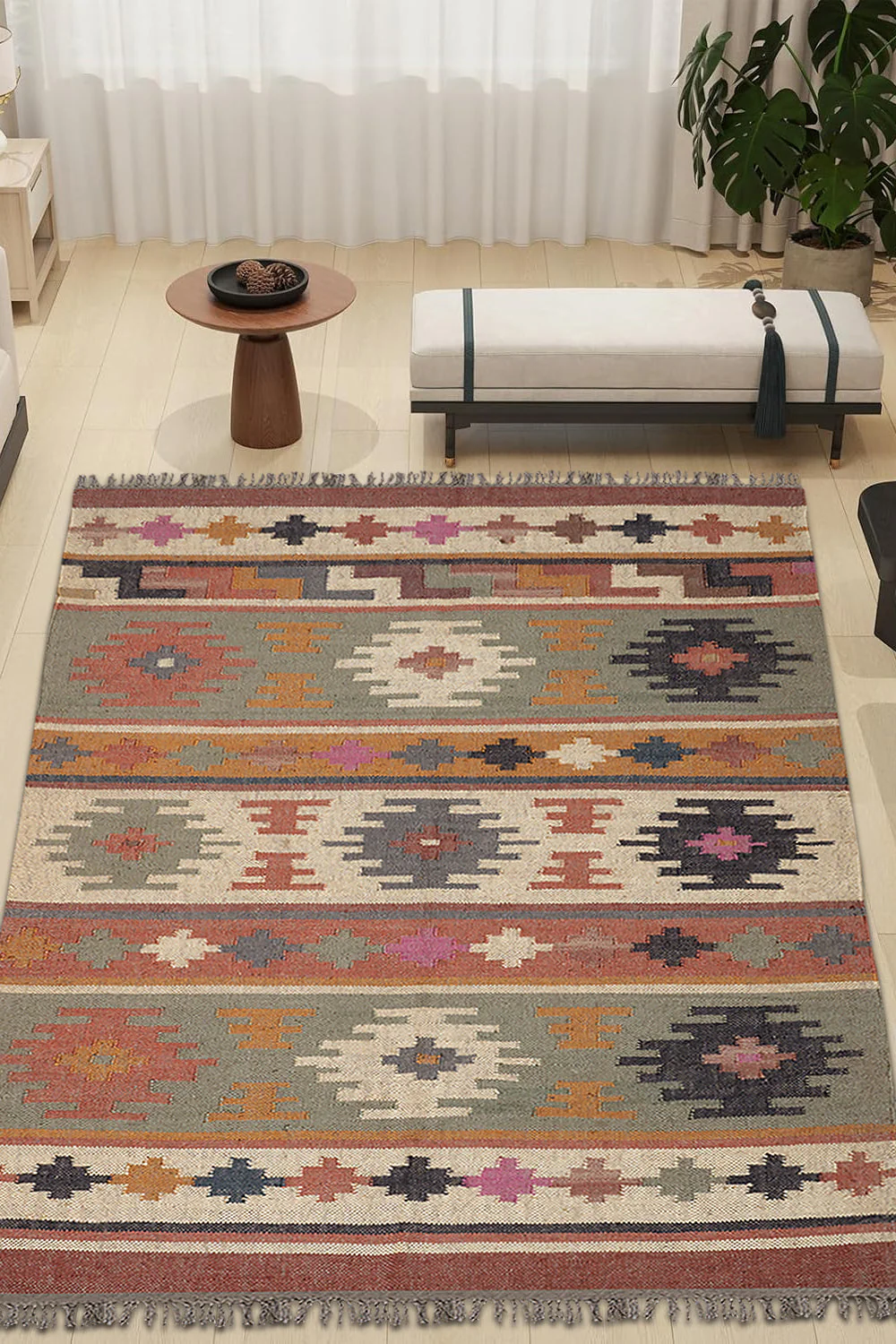
Ask anyone who has replaced a living room rug twice in five years what they’d do differently, and the answer tends to be the same. Buy natural. Buy once. The appeal of cheaper synthetic rugs is obvious until you’ve lived with one long enough to watch it flatten, fade, and lose whatever it had going for it in the first few years. Natural fibre rugs don’t do that. They do the opposite, which is the more interesting story.
Rugs for Living Room: What Natural Fibres Actually Offer
Before anything else, the material question is worth settling. For living room rugs, two natural fibres do the work better than anything else: jute and wool.
Jute rugs have an honesty to them that’s hard to find in manufactured alternatives. The tone is warm, the texture is organic, the whole thing reads as a floor covering that came from somewhere real rather than a factory floor. In a living room, that quality shows. It doesn’t compete with the furniture or the walls. It grounds them.
Wool is the other conversation, and a richer one. Wool living room rugs, particularly hand knotted ones, improve with use rather than declining from it. The pile holds. The colours, those deep terracottas and warm greens that living rooms respond to so well, sit differently in natural wool than in any synthetic fibre. More depth, more warmth, more of the quality that makes a floor worth looking at rather than just standing on.
Living Room Rug Colours: The Natural Fibre Advantage
There is a particular quality to colour in a natural fibre rug for the living room that becomes obvious the moment you place one in a room alongside a synthetic alternative.
Synthetic fibres take dye evenly and permanently. The colour is consistent, predictable, and stays exactly as it was. Natural fibres, wool especially, take dye differently. The colour has depth rather than uniformity. It shifts slightly with the light, warms in lamplight, and holds differently in shadow. A terracotta wool rug is not one colour; it’s a range of tones that reads as one. That quality is what makes natural fibre rugs look more considered than their price alone would suggest, and why rooms built around them tend to feel more resolved than rooms built around synthetic alternatives.
The palettes doing the most interesting work in living rooms right now, terracotta, ochre, warm stone, deep olive, the earthy reds that sit somewhere between rust and burgundy, are all colours that natural fibres carry better than synthetic ones. Colour psychology research consistently links these earth tones to calm, stability and comfort. They also age well, which matters in a living room that absorbs daily life.
Floor Rugs for the Living Room: Getting Size Right
The size mistake happens in living rooms more than anywhere else. The handmade rug arrives, it’s unrolled, and it immediately looks marooned. A small island of textile surrounded by a sea of bare floor, with furniture hovering above rather than belonging to it.
The guidance is consistent across every designer who works with living room rugs: go larger than feels comfortable when you’re shopping. In a living room, the front legs of every seating piece should sit on the rug at minimum. All four legs are better. The rug should define the seating area, not sit within it. For most standard living room configurations, this means an 8 x 10 foot rug at the very minimum, and a 9 x 12 carpet for anything with a larger sofa or sectional.
A natural fibre rug in the right size does something else that an undersized rug can’t: it makes the room feel intentional. The floor reads as a decision rather than an afterthought. Everything above it responds accordingly.
What Makes Natural Fibre Rugs the Long-Term Choice
The global rugs and carpets market was valued at over 64 billion dollars as of 2025. Within that market, the shift toward natural materials is being driven by something more durable than trend: the recognition that materials from the earth last differently than materials made in factories.
A well-made jute rug develops a patina over years of use. A wool rug deepens in colour and character. Neither does the gradual flattening and greying that synthetic pile rugs do. The slow deterioration that ends with a rug that needs replacing rather than keeping. Natural fibre rugs are, in the most literal sense, made to be lived with.
Kesari Home: Natural Fibre Rugs for the Living Room
At Kesari Home, natural fibres are not a trend we’re responding to. They’re the starting point our living room rug collection was built around. Jute, wool, hand knotted construction, and the earthy palettes that work in real rooms under real light. Whether the living room calls for the foundational warmth of a jute flatweave or the richer character of a hand knotted wool carpet, each rug in our collection is made to hold its quality over the kind of daily use a living room actually sees. Explore the Kesari Home living room rug collection at kesarihome.com.