
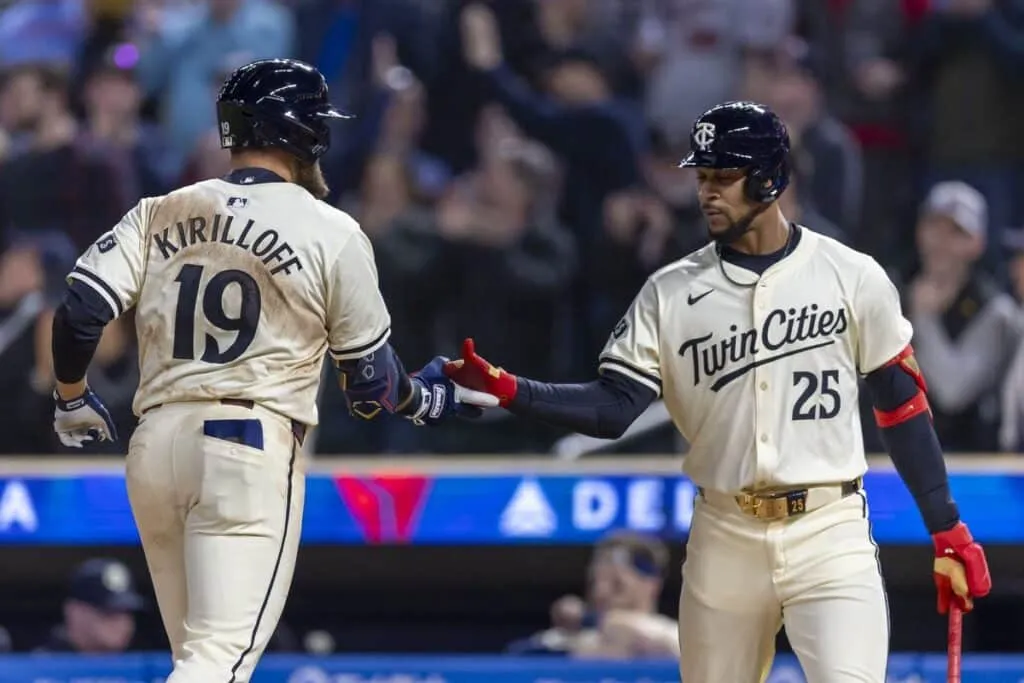
detroit tigers vs minnesota twins match player stats are more than just numbers on a digital scoreboard; they are the chronicled history of a divisional rivalry that defines summer in the American League Central. When these two historic franchises meet, the box score often reflects a grinding, tactical brand of baseball that values every single 90-foot advancement. Whether they are playing under the skyline of downtown Detroit or the crisp, modern atmosphere of Minneapolis, the individual performances carry significant weight for both the standings and the local pride of the fanbases.
Fans who follow these matchups closely know that the statistics often tell a tale of contrasting team-building philosophies. On one side, you have the Tigers, who have recently focused on a youth-heavy rotation and homegrown power hitters. On the other, the Twins have frequently relied on a blend of veteran leadership and high-velocity arms to maintain their position as perennial contenders. Digging into the specific match statistics reveals how these different approaches clash over a long, 162-game season, where every hit and strikeout is recorded for posterity.
The intensity of these games is often hidden within the subtle nuances of the player performance data. A simple groundout might not look like much, but when you look at the advanced metrics, you might see a 105-mph exit velocity that indicates a hitter is on the verge of a breakout. Similarly, a pitcher’s strikeout count only tells half the story if you don’t look at the swing-and-miss percentage on their primary breaking ball. These are the details that true baseball aficionados search for when they open the morning paper or refresh their favorite sports app.
Understanding the detroit tigers vs minnesota twins match player stats for Pitchers
When we look at the mound, the detroit tigers vs minnesota twins match player stats often highlight the dominance of left-handed gems like Tarik Skubal for the Tigers. Skubal has become a centerpiece for Detroit, and his statistics against Minnesota usually show a high concentration of strikeouts and a low walk rate. Watching him work through a Twins lineup that often features patient hitters like Carlos Correa is a masterclass in modern pitching, where velocity and location must coexist to achieve success.
Minnesota’s rotation responds with its own set of statistical marvels, often led by the likes of Pablo López or Joe Ryan. Their ability to minimize home runs and keep the ball in the park is essential when facing the expansive dimensions of Comerica Park. Pitching stats in this matchup are frequently influenced by the park factors, as both Detroit and Minnesota play in stadiums that are generally considered “pitcher-friendly” compared to the smaller dimensions of parks in the AL East.
The bullpen stats are equally fascinating, especially in the late innings when a one-run lead is on the line. The Twins have historically utilized high-velocity closers who can shut the door with triple-digit fastballs. This shows up in the “K/9” metrics, where the Minnesota relief corps often ranks high. The Tigers, conversely, have built bullpens that focus on different arm angles and specialized matchups, which often leads to higher “hold” totals for their middle-relief specialists.
Beyond the standard ERA and WHIP, advanced scouting relies on spin rates and horizontal movement data. When these two teams face off, the catching staffs must be incredibly disciplined, as a single wild pitch or a failed framing attempt can change the entire outcome. By analyzing the detroit tigers vs minnesota twins match player stats through the lens of pitching efficiency, we see a game of inches where the pitcher usually has the upper hand until the second or third time through the batting order.
Offensive Breakdowns and Power Metrics
On the offensive side, the stats highlight the rising stars of the Tigers’ organization. Players like Riley Greene and Spencer Torkelson represent the future of Detroit’s hitting profile. Their stats against Minnesota often show a high “hard-hit percentage,” indicating that even when they aren’t reaching base, they are making solid contact. This is a vital metric for coaching staffs to track, as it suggests long-term sustainability even during a temporary slump in batting average.
The Minnesota Twins often counter with a lineup built on power and veteran savvy. Carlos Correa’s presence in the box score is a constant threat, and his historical stats against Detroit show a player who understands how to exploit the gaps in the Tigers’ defensive positioning. When you look at his “OPS” (On-base Plus Slugging) in these divisional games, it is clear that he elevates his performance when the stakes are highest and the divisional race is tight.
Another interesting statistical trend in this matchup is the “stolen base” category. In recent years, both teams have attempted to incorporate more speed into their game plans. Watching a young Tiger speedster try to swipe second against a veteran Twins catcher provides a statistical battle of “pop time” versus “lead distance.” These numbers might seem small, but they often lead to “runs created,” a metric that correlates directly with the winning percentage of both franchises.
Fielding stats are often the most underrated part of the detroit tigers vs minnesota twins match player stats summary. A diving catch in the gap or a perfectly executed double play can save a pitcher’s stat line and demoralize the opposing offense. The “DRS” (Defensive Runs Saved) for the Twins’ outfield often shows why they are so difficult to score against, as their range allows them to turn potential doubles into routine fly outs. Detroit’s infield, meanwhile, has shown significant improvement in its “UZR” (Ultimate Zone Rating), making them a much more cohesive unit.
Historical Context of the AL Central Rivalry
To truly appreciate the current stats, one must look back at the historical milestones between these two clubs. The 2009 American League Central tie-breaker game is perhaps the most famous statistical anomaly in the history of the rivalry. That single game produced a box score that fans still discuss today, featuring incredible endurance from the starters and heart-stopping moments in extra innings. Comparing current stats to that legendary game helps provide a sense of perspective on how the game has evolved.
The move from the Metrodome to Target Field changed the statistical profile of the Minnesota Twins forever. While the Dome was known for its “Baggy” and turf-assisted bounces, Target Field is an open-air cathedral where the wind and temperature play a major role in the flight of the ball. Similarly, the renovation of Comerica Park, including the moving of the fences, has slightly altered the home run rates for Detroit players, making the historical “home vs. away” splits a moving target for analysts.
Season-long series stats also tell a story of momentum. It is not uncommon for one team to dominate the early-season matchups only for the other to roar back in September. Tracking the “head-to-head” record over a decade shows a remarkably balanced competition, with neither team maintaining a long-term stranglehold on the other. This parity is what keeps the fans coming back, as the detroit tigers vs minnesota twins match player stats rarely predict a predictable outcome before the first pitch is thrown.
The “Magic Number” and “Games Back” stats start to matter as the calendar turns to August. Every individual performance contributes to these team-wide metrics. A pinch-hit single in a random Tuesday game in June might seem insignificant, but when the Tigers and Twins are separated by only a few games in the final week of the season, that single data point becomes a crucial part of the journey toward the postseason.
Sabermetrics and the Statcast Era
In the modern age, we are blessed with an incredible amount of data through Statcast. This technology allows us to see things that the human eye might miss. For example, when a Detroit outfielder makes a running catch, Statcast can tell us the “catch probability” based on the distance covered and the time the ball was in the air. These stats have revolutionized how we evaluate the defensive contributions of players who might not have high offensive numbers.
For hitters, “launch angle” has become a buzzword in every clubhouse. Minnesota hitters are often coached to maximize their launch angle to take advantage of their power, while Detroit hitters might focus on a more “line-drive” approach to utilize the large gaps in their home park. Seeing these differences in the detroit tigers vs minnesota twins match player stats helps fans understand the specific “hitting DNA” of each team and why certain players find more success against specific pitching archetypes.
“Barrels” is another metric that has gained popularity. A “barreled” ball is one hit with the perfect combination of exit velocity and launch angle, usually resulting in a hit. When you see a box score where the Tigers have six barrels but only two runs, you know they were victimized by bad luck or exceptional defense. This deeper level of analysis prevents fans from becoming too frustrated with the final score, as it provides evidence of a team’s underlying quality.
The “Expected ERA” (xERA) of pitchers like Tarik Skubal often suggests he is even better than his traditional stats indicate. This metric looks at the quality of contact he allows rather than just the results. If he allows a lot of weak pop-ups that happen to fall for hits, his xERA will remain low, signaling to management that he is doing his job effectively. This kind of data is essential for long-term contract negotiations and trade deadline decisions.
The Managerial Influence: Hinch and Baldelli
The strategies of A.J. Hinch and Rocco Baldelli are etched into the match statistics through their substitution patterns and pitching changes. Hinch is known for his analytical approach, often using “openers” or moving his defensive players into non-traditional shifts to maximize their efficiency. His statistical fingerprints are visible in the “defensive positioning” data, where the Tigers often rank high in being in the right place at the right time.
Rocco Baldelli, on the other hand, has shown a remarkable ability to manage his bench and keep his veterans fresh. His “platoon splits” stats are often some of the most disciplined in the league, ensuring that his hitters are always in a position to succeed against the opposing pitcher’s handedness. This creates a statistical advantage for the Twins over the course of a three-game series, as they rarely have a player in a disadvantageous matchup for more than one at-bat.
The use of the “Designated Hitter” spot is another area where the managers leave their mark. Whether they use a dedicated DH or rotate their stars to give them a “half-day off,” the resulting stats show how well a team can maintain its offensive production without sacrificing defensive quality. The detroit tigers vs minnesota twins match player stats often reflect these tactical maneuvers, especially in the middle innings when the game is hanging in the balance.
Intentional walks and “pitching around” certain hitters are also documented in the stats. If the Tigers choose to walk Carlos Correa to get to a less experienced hitter, the “intentional walk” stat is recorded, but the real story is in the “success rate” of the subsequent at-bat. Managers live and die by these numbers, and their reputations are often built on the statistical outcomes of these high-pressure decisions made in the heat of a divisional battle.
The Fan Experience and Statistical Engagement
For the fans at the ballpark, the stats are part of the entertainment. The giant video boards at Comerica Park and Target Field display real-time data that keeps the crowd engaged. Seeing a player’s “batting average with runners in scoring position” creates a sense of anticipation and helps the audience understand the importance of the moment. It turns a simple game into a narrative where everyone knows the odds and the history of the participants.
Fantasy baseball has also changed how we view the detroit tigers vs minnesota twins match player stats. A fan might be rooting for their team to win, but they are also secretly hoping their star pitcher on the opposing team racks up twelve strikeouts. This dual engagement has led to a much more statistically literate fanbase, where people can discuss “FIP” and “BABIP” with the same passion they used to reserve for “home runs” and “RBI.”
The “Player of the Game” honors often go to the individual with the most impressive stat line, but true fans know that the “unsung hero” is often found in the secondary stats. Maybe it was the middle reliever who threw two perfect innings to stabilize the game, or the shortstop who turned a difficult double play to end a bases-loaded threat. These are the players whose detroit tigers vs minnesota twins match player stats might not jump off the page, but they are essential for the win.
As we look at the seasonal totals, we see a picture of endurance. Playing nearly every day for six months takes a toll on the body, and the stats often reflect this through late-season fatigue. A player’s “September splits” are a testament to their conditioning and mental toughness. Watching the Tigers and Twins battle through the heat of the summer and the chill of the early autumn provides a statistical journey that is uniquely American and endlessly fascinating.
Prospects and the Future of the Rivalry
The minor league stats are the early warning system for the next generation of this rivalry. When a top prospect for the Tigers is tearing up Triple-A, fans start looking at his projected MLB stats and imagining how he will fit into the lineup against the Twins. This “pipeline” of talent ensures that the detroit tigers vs minnesota twins match player stats will continue to evolve and excite for decades to come, as new faces bring new skills to the diamond.
The integration of international talent has also broadened the statistical horizons of both clubs. From the power of Latin American hitters to the precision of pitchers from across the globe, the box scores are now a multicultural map of excellence. This diversity is reflected in the wide variety of playing styles we see on the field, from the “small ball” approach to the “three true outcomes” philosophy that has dominated much of the modern era.
Rule changes, such as the pitch clock and the ban on extreme shifts, have also left their mark on the stats. We are seeing faster games and more base hits, which has revitalized the “batting average” and “stolen base” categories. The detroit tigers vs minnesota twins match player stats from the last two seasons look noticeably different from those of five years ago, proving that baseball is a living, breathing sport that is constantly adjusting to improve the experience for everyone involved.
Every time the Tigers and Twins meet, a new set of data is generated, adding to the mountain of history that already exists. From the first pitch in the spring to the final out of the fall, the stats are the ultimate record of who was better on that particular day. They provide the evidence for our arguments, the fuel for our passion, and the foundation for our love of the game. Whether you are a fan in Michigan, Minnesota, or anywhere else in the world, these player stats are the heartbeat of the AL Central.
1 comment
[…] also :- detroit tigers vs minnesota twins match player stats: Vital Guide milwaukee bucks vs portland trail blazers match player stats 0 comment 0 […]
Comments are closed.