
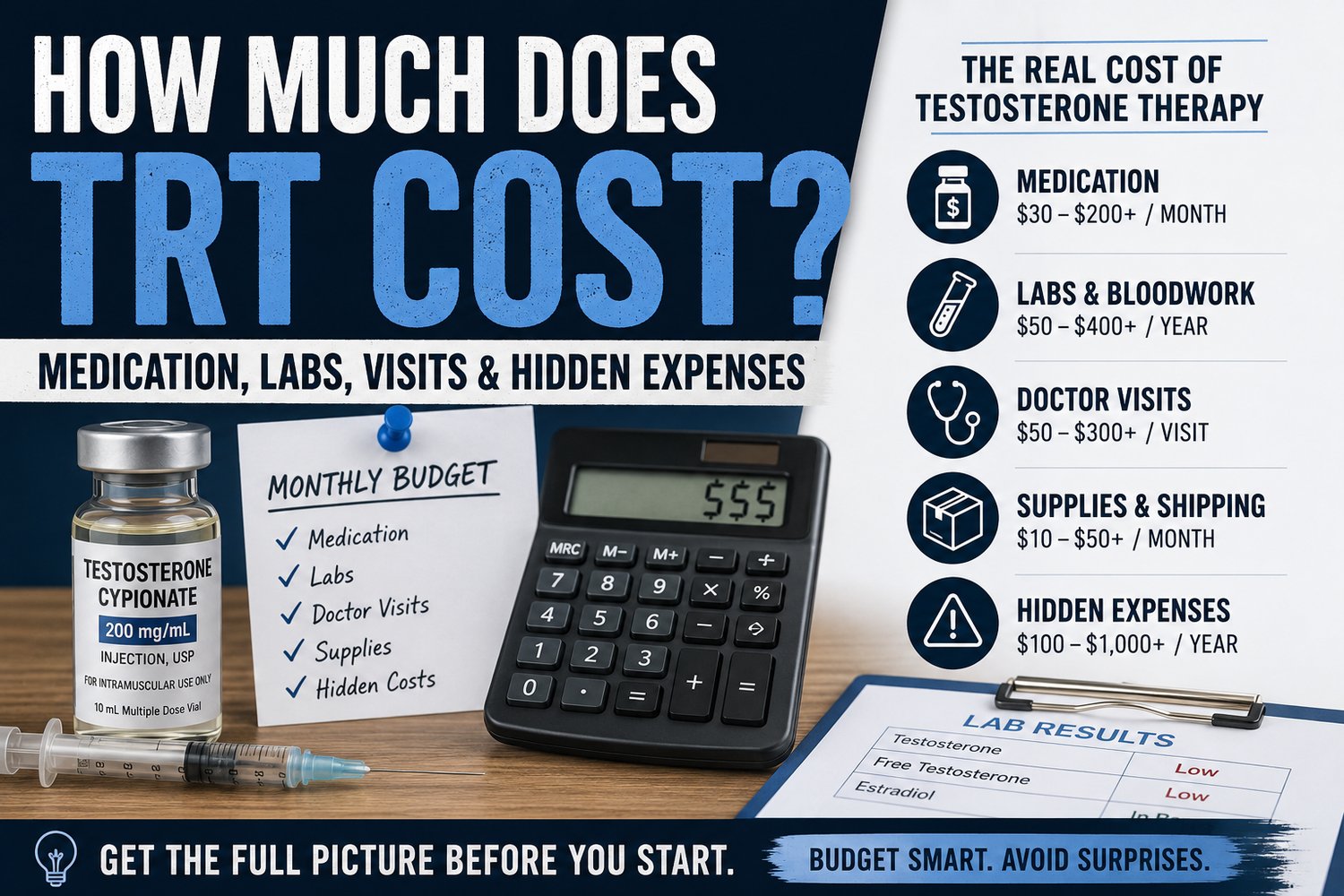
Anyone considering hormone optimization quickly runs into one practical question: what will it actually cost? The cost of trt depends on several moving parts, including the medication type, how often you need lab work, and whether you choose a physician-supervised clinic or a general provider. Understanding these pieces upfront helps you budget with confidence and avoid surprises later. The answers below walk through what most patients want to know before they commit.
How Much Does Testosterone Replacement Therapy Usually Cost Each Month?
Monthly spending varies widely because no two treatment plans look alike. Some patients pay a modest amount for a basic injectable protocol, while others invest more in a plan that bundles medication, monitoring, and ongoing physician support. The biggest drivers are the delivery method, the dosage your body requires, and the level of clinical oversight included. Rather than focusing on one headline number, it helps to ask what is covered in the quoted price.
What Factors Influence the Overall Price?
Several elements shape your total. The first is the form of therapy. Injections, gels, creams, and pellets all carry different price tags and different maintenance schedules. The second is lab testing, since blood work is needed at the start and at regular intervals to keep dosing safe and effective. The third is the provider model. A clinic that offers consultations, follow-ups, and adjustments as part of one plan may look more expensive at first glance but can reduce separate visit fees. Finally, your location and pharmacy access can nudge costs up or down.
Is the Initial Evaluation Included in the Price?
This depends on the provider. Some practices fold the first consultation and baseline labs into a single starting fee, while others bill them separately. A thorough evaluation typically includes a review of symptoms, a look at your medical history, and a panel measuring total and free testosterone along with other relevant markers. Always ask for a clear breakdown so you know whether the first appointment is part of the package or an additional line item.
Does Insurance Help Cover Treatment?
Coverage is inconsistent. Many insurers require documented low testosterone levels and clear symptoms before approving therapy, and some limit which formulations they will pay for. Others exclude hormone treatment altogether. Contact your insurer to confirm what is covered, and ask your provider whether they can supply the documentation a plan may require. Even when coverage falls short, many patients find that self-pay programs are predictable and easier to manage.
Are There Hidden Fees to Watch For?
Transparent pricing matters. Before you enroll, confirm whether the quote includes medication, shipping, supplies such as syringes, follow-up visits, and routine lab work. Also ask about renewal terms and whether the rate changes after an introductory period. A reputable provider will happily explain every charge in plain language, so if answers feel vague, consider that a signal to keep looking.
Which Delivery Method Fits Different Budgets?
Injections are often the most economical choice and can be self-administered at home after training. Topical gels and creams offer convenience and steady absorption, though they may cost more over time. Pellets are placed under the skin and release hormone gradually, which suits people who prefer fewer treatments, though each procedure carries its own fee. Your physician can help match a method to both your lifestyle and your budget.
Can Better Monitoring Save Money Over Time?
Yes, in many cases. Consistent lab work allows your provider to fine-tune your dose, which can prevent wasted medication and reduce the chance of side effects that require extra appointments. Patients who stay on schedule with follow-ups often reach their ideal dose sooner, which keeps the long-term expense more predictable and supports better results.
How Do You Choose a Provider Without Overpaying?
Start by comparing what each plan actually delivers rather than just the sticker price. Look for licensed physicians, clear communication, and a structured monitoring process. Read patient feedback, ask how dosing adjustments are handled, and confirm that support is available between visits. Quality care that prevents complications usually proves more valuable than the lowest advertised rate.
What Is the Best Next Step?
If you are ready to explore options, review the details at Get Peter MD’s testosterone therapy page and speak with a qualified provider about your goals. A personalized evaluation gives you an accurate picture of both your health needs and your expected investment, so you can move forward knowing exactly what to expect.