
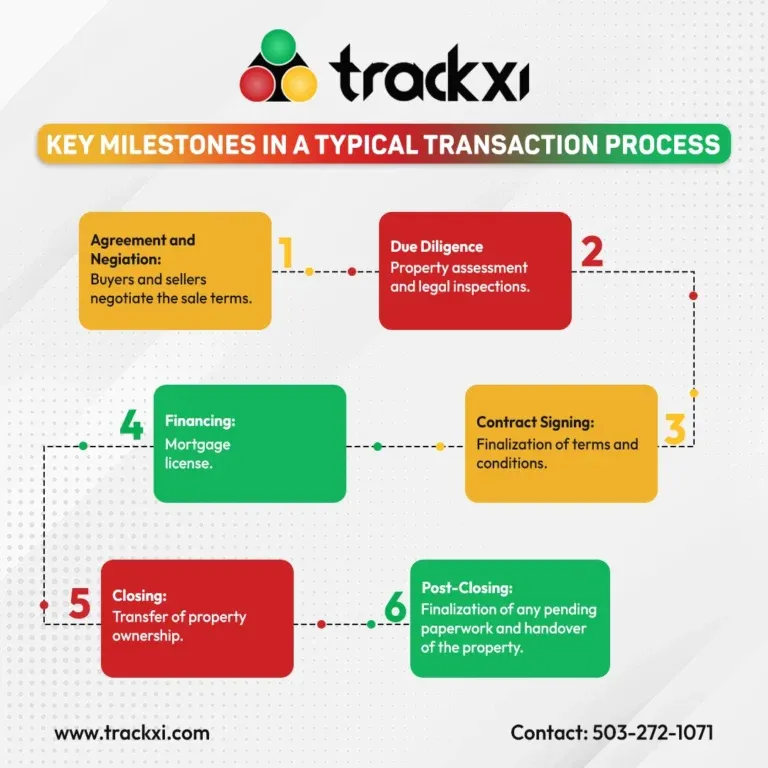
Every real estate transaction creates valuable information about the progress of the transaction, timelines and how efficiently transactions are being run. But in many cases, brokerages still have difficulties organising and interpreting this information.
This is where modern systems, like a real estate transaction tracker and transaction coordinator real estate software, are playing a major role. These tools are not just helping teams record transactions; they are transforming how brokerages analyse, manage and optimise their entire deal process.
Why traditional tracking methods are no longer effective
In many brokerages, transaction management still depends on spreadsheets, emails or basic tracking tools. A real estate transaction tracker in its simplest form only records deal status such as pending, in progress or closed.
While this provides basic visibility, it does not offer deeper insights, such as:
- Why is a transaction delayed
- Which stage is causing bottlenecks
- How agents are performing across deals
- What workflow patterns are slowing down closings
Because of this limitation, managers often rely on guesswork instead of data-driven decision-making.
The evolution of transaction coordinator software
Modern transaction coordinator real estate software has significantly evolved beyond simple task tracking. Instead of just organising documents and deadlines, it now helps manage the entire transaction lifecycle.
These overarching structures allow groups to:
• Monitor all stages of transactions in real time
• Automate task tracking and deadline reminders
• Centralised document management and communication.
• Improve coordination between agents, customers and lenders
This evolution is helping brokerages move away from fragmented workflows toward fully structured systems.
How AI improves real estate transaction tracking
When properly integrated into a real estate transaction management system, AI adds valuable insights to what was once a primarily static tool. Instead of just displaying reputation updates, AI analyses transactional data and identifies patterns.
For example, AI can detect the following:
• Which transactions have every chance of being delayed
• Common bottlenecks in deal development
• Agent performance variation
• Identifying workflow inefficiencies across transactions.
This transforms tracking from a passive tool to an active selection aid.
Better visibility through transaction coordinator software
A major advantage of modern transaction coordinator real estate software is improved visibility. Instead of manually checking multiple systems, brokerages can see the entire transaction pipeline in one place.
This helps teams:
- Monitor deal progress in real time
- Identify stalled transactions quickly
- Track document completion status
Ensure consistency in meeting deadlines.
Managers will be able to make decisions faster and with improved accuracy, due to the improved visibility.
Diminishing manual workload by way of automation
One of the key improvements in modern real estate transaction tracker systems is automation. Repetitive tasks that used to be done by hand are now done automatically.
For example:
The tasks are created at the start of a new deal.
The deadlines are set as per the type of transaction
Reminders are automatically generated to relevant parties.
The changes to the status are synced in real time.
This minimises human mistakes and frees up groups from paperwork to concentrate more on customer sales.
Improving Coordination Across Real Estate Teams
Using an effective real estate transaction coordinator software system improves coordination among all parties involved in a transaction. Communication and updates are centralised, reducing the need for multiple emails and phone calls while providing a single source of information. This ensures:
- Agents are kept abreast of all stages
- Coordinators can efficiently manage multiple deals
- Lenders and legal counsel are on the same side
This minimises misunderstandings and enhances the speed of overall transactions.
Impact on brokerage scalability
As brokerages grow, managing increasing transaction volume becomes more complex. A real estate transaction tracker helps maintain structure even as the workload increases.
With centralised systems and automation, brokerages can:
- Handle more transactions without adding extra staff
- Maintain consistent workflow quality
- Reduce administrative overhead
- Improve operational efficiency at scale
This makes growth more manageable and sustainable.
Why integrated systems are becoming essential
Today’s transaction coordinator real estate software is becoming more integrated, bringing transaction tracking, automation and coordination together in one platform. All communication, documentation and tracking are done in one platform rather than separate tools. It simplifies the entire transaction process and makes it more efficient.
The future of real estate transaction systems
The future of the real estate transaction tracker is moving toward AI-driven automation and predictive intelligence.
Future systems will be able to:
- Predict transaction delays before they happen
- Suggest workflow improvements automatically
- Optimise task distribution across teams
- Provide real-time performance insights
This will make transaction coordination faster, smarter and far more efficient.
Conclusion
The adoption of real estate transaction tracker systems and transaction coordinator real estate software is changing the way brokerages run deals. The traditional fragmented and manual process is shifting into an automated, structured and data-driven process. With the continued rise of AI and automation, these systems will further contribute to increased efficiency, minimal error rates and scalable expansion in the real estate sector.