
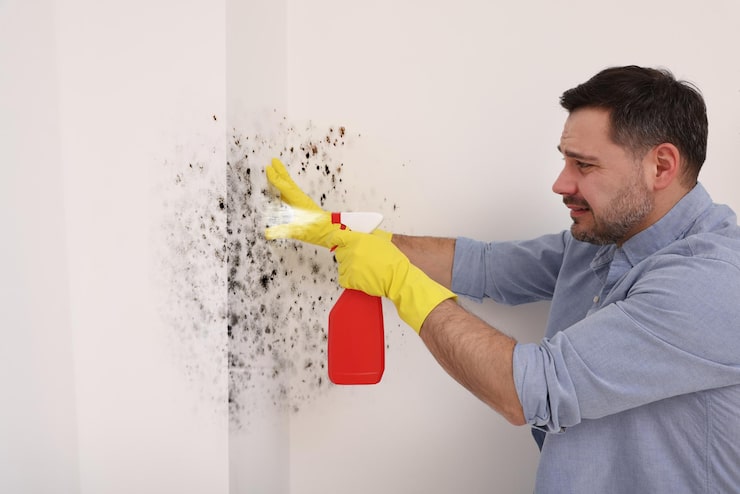
Mould issues begin to develop through hidden initial signs because their first signs tend to emerge from concealed locations. Most of the time, it begins quietly—maybe a slight smell in the room, a damp corner or a patch that doesn’t dry properly. People often ignore these small signs, thinking it’s nothing serious. But that’s exactly how mould spreads.
People need to stop everything they do because they must understand their situation before they start cleaning and contacting services. The mould inspection process shows its value at this particular moment. The process helps you discover the actual conditions that exist beyond visible areas. The process helps you select the most suitable mould removal service which matches your needs.
Why Mould Problems Are Often Misunderstood
One of the biggest mistakes people make is thinking mould is just a surface issue. You see it, you clean it and you move on. But mould doesn’t work like that.
It grows where there is moisture. And in many cases, that moisture is hidden—inside walls, behind furniture or near areas with poor airflow. So even if you clean the visible patch, the problem still exists underneath.
That’s why mould tends to come back again and again. Without understanding the cause, it’s almost impossible to get rid of it completely.
What Makes Mould Inspection So Important?
Think of mould inspection as the step where you stop guessing and start understanding. Instead of reacting to what you see, inspection helps you:
- Identify hidden mould growth
- Understand where moisture is coming from
- Check how far the problem has spread
- Decide what kind of treatment is needed
It’s not about making things complicated—it’s about making the right decision from the beginning.
It’s Not Just About Visible Mould
A common misunderstanding is that mould is only where you can see it. In reality, visible mould is often just a small part of the problem.
There could be more growth in:
- Wall interiors
- Ceiling panels
- Behind cabinets
- Under flooring in damp areas
- Around AC units
Without proper mould inspection, these areas are easy to miss.
Real-Life Signs People Often Ignore
Most people don’t book an inspection until the problem becomes obvious. But there are early signs that usually get ignored.
You might notice:
- A room smelling slightly damp all the time
- Walls taking longer to dry
- Corners feeling moist
- Paint slowly peeling
- More dust or irritation than usual
These are not random issues—they are early warnings. Acting at this stage makes things much easier.
Why Quick Fixes Don’t Work
It’s very common to try quick solutions—cleaning sprays, wiping surfaces, or repainting walls. These might make the space look better for a while. But the problem is still there. When the root cause is not addressed:
- Mould comes back
- The affected area becomes larger
- Cleaning becomes more frequent
- Costs increase over time
This is why inspection is more useful than repeated cleaning.
How Inspection Helps You Choose Better
Once you know what you’re dealing with, choosing the best mould removal service becomes much easier. Without inspection, you’re just guessing:
- You may choose the wrong type of service
- You may under-treat or over-treat the problem
- You may spend more than needed
But with proper inspection, everything becomes clearer. You can make decisions based on facts, not assumptions.
What a Good Mould Removal Service Actually Does
The best mould removal service is not the one that simply cleans fast—it’s the one that solves the problem properly. A reliable service will:
- Start with a proper inspection
- Explain the issue clearly
- Use safe methods for removal
- Treat the affected areas fully
- Suggest ways to prevent future growth
It’s more about quality than speed.
Hidden Areas That Often Get Missed
One reason mould problems continue is because certain areas are rarely checked.
In many homes and workplaces, mould is commonly found in:
- The back side of wardrobes
- Inside storage units
- Ceiling edges and corners
- Behind curtains
- Around AC vents
These areas don’t get much attention, which makes them perfect spots for mould growth.
The Role of Moisture in Mould Growth
If there’s one thing that controls mould, it’s moisture.
Without moisture, mould cannot grow. That’s why inspection focuses so much on finding the source of dampness. It could be:
- A small leak
- Poor ventilation
- Trapped humidity
- Condensation from cooling systems
Once this is identified, the solution becomes much more effective.
After Inspection: What Changes?
Once you complete a mould inspection, everything becomes clearer. You understand:
- How serious the problem is
- What caused it
- Which areas are affected
- What needs to be done next
This removes confusion and helps you take the right step instead of trying random fixes.
Prevention Becomes Easier
One of the biggest benefits of inspection is that it helps prevent future problems. When you know the cause, you can take simple steps like:
- Improving ventilation
- Fixing leaks early
- Keeping areas dry
- Allowing airflow in closed spaces
These are small changes, but they make a big difference over time.
When You Should Not Delay Inspection
There are situations where waiting is not a good idea. You should consider mould inspection if:
- Mould keeps coming back
- The smell doesn’t go away
- You notice spreading patches
- The area feels damp regularly
- It’s affecting comfort in the space
In these cases, early action can prevent bigger issues.
Cost vs Smart Decision
Some people avoid inspection thinking it’s an extra cost. But in reality, it helps avoid bigger expenses. Without inspection:
- You may spend on repeated cleaning
- Damage may increase
- The problem may spread further
With inspection, you solve the issue once instead of dealing with it again and again.
Final Thoughts
Mould problems need to be understood through their complex nature which extends beyond their initial appearance. The visible part of the problem shows only a small section of the bigger problem which exists.
Mould inspection needs to start the process because it provides essential benefits to the project. The process provides you with clear information about the situation while helping you decide the best mould removal service as per your requirements.
The correct first step should be taken because it will help avoid future problems which result from guesswork and repeated solutions.